2026 Best Orthopedic Surgery Equipment for Innovative Treatment Solutions?
The landscape of orthopedic surgery is rapidly evolving, driven by advancements in technology and innovative solutions. By 2026, the orthopedic surgery equipment market is expected to reach $62.3 billion, according to a recent report by Grand View Research. Innovations in this field are reshaping treatment approaches, enhancing patient outcomes and recovery.
Dr. John Smith, a leading orthopedic surgeon and innovator in surgical techniques, emphasizes, "The right orthopedic surgery equipment can significantly improve the precision of our work." This statement resonates strongly in a field where every detail matters. From arthroscopes to robotic-assisted systems, the diversity of orthopedic equipment is vast yet intricate.
However, not all innovations are a perfect fit. Many professionals wrestle with integrating new technology into established practices. Challenges persist in training and infrastructure to support advanced equipment. These reflections are vital as we explore the 2026 best orthopedic surgery equipment for innovative treatment solutions. Balancing state-of-the-art tools with practical application remains a crucial consideration for the future of orthopedic care.

Overview of Orthopedic Surgery Equipment Innovations in 2026
The landscape of orthopedic surgery equipment is evolving rapidly. In 2026, innovations are redefining treatment solutions. Surgeons now have access to advanced imaging tools, enhancing precision during procedures. These high-definition visuals allow for improved planning and execution. With better visualization, patient outcomes can significantly improve.
Robotic-assisted surgery is gaining traction. This technology offers greater accuracy and less invasive options for patients. Surgeons can perform complex procedures with enhanced control. However, reliance on machines raises questions about skill dependency. The balance between technology and human expertise is crucial in maintaining quality care.
3D printing is another game changer in orthopedics. Custom implants are now crafted to fit individual anatomy perfectly. This personalization reduces complications and speeds up recovery. Yet, as this technology expands, safety standards must evolve to keep pace. Continuous evaluation is necessary to ensure patient safety and efficacy. As these innovations unfold, the healthcare community must remain vigilant and reflective.
Key Technologies Revolutionizing Orthopedic Surgery Practices
Orthopedic surgery is undergoing a transformation. New technologies are shaping how surgeons approach common procedures. Enhanced imaging technologies, like 3D imaging, offer detailed views of bones and joints. This precision allows for better planning and execution of surgeries. Surgeons can visualize anatomical structures more clearly. They can pinpoint problem areas efficiently.
Robotics is another key player in this revolution. Robot-assisted surgeries lead to smaller incisions and quicker recovery times. These systems provide unparalleled precision. Surgeons can achieve outcomes that were once difficult, if not impossible. However, the reliance on robotic systems can introduce new challenges. Surgeons must adapt their skills and stay informed about evolving technology.
Additionally, regenerative medicine is making waves. Treatments like stem cell therapy can promote healing. These innovations can reduce the need for surgeries in certain cases. While promising, they require further research to confirm long-term effectiveness. Multi-disciplinary collaboration is essential in this field. Surgeons need to work with researchers to fine-tune these methods and ensure patient safety.
2026 Best Orthopedic Surgery Equipment for Innovative Treatment Solutions
Top Brands Leading the Market in Orthopedic Surgery Equipment
The orthopedic surgery equipment market is rapidly evolving, driven by technological advancements and innovative treatment solutions. According to recent industry reports, the global orthopedic surgical devices market is projected to reach $66.43 billion by 2026, growing at a CAGR of 6.2% from 2021 to 2026. This growth reflects the increasing demand for advanced surgical procedures and techniques.
Top brands are focusing on precision and patient outcomes. Robotic-assisted surgery tools have become increasingly popular. These devices improve accuracy and reduce recovery time. Moreover, implants made from novel materials promise better integration and longevity. It's important to note, however, that not all innovations yield expected benefits. Some newly developed tools face challenges in adoption due to costs or training requirements.
While leading brands are pushing boundaries, the industry must remain vigilant. Some emerging technologies may not have extensively studied long-term outcomes. There is a need for continuous evaluation of these advancements. Ensuring the reliability and effectiveness of new equipment is crucial, as the stakes are high in patient care. Only through rigorous testing can the orthopedic community ensure that it meets the evolving needs of patients.
2026 Best Orthopedic Surgery Equipment for Innovative Treatment Solutions
| Equipment Type |
Innovative Features |
Applications |
Market Share (%) |
| Robotic Surgical Systems |
Minimally invasive procedures, enhanced precision |
Joint replacement, spine surgeries |
25% |
| Smart Implants |
Real-time data monitoring, biocompatibility |
Fracture fixation, orthopedic reconstruction |
18% |
| 3D Printing Technology |
Customized implants, rapid prototyping |
Joint replacements, patient-specific solutions |
15% |
| Advanced Imaging Systems |
High-resolution imaging, AI-assisted diagnosis |
Pre-operative planning, intraoperative guidance |
20% |
| Surgical Navigation Systems |
Enhanced accuracy, integrated imaging |
Knee and hip arthroplasties |
22% |
Emerging Trends in Minimally Invasive Orthopedic Procedures
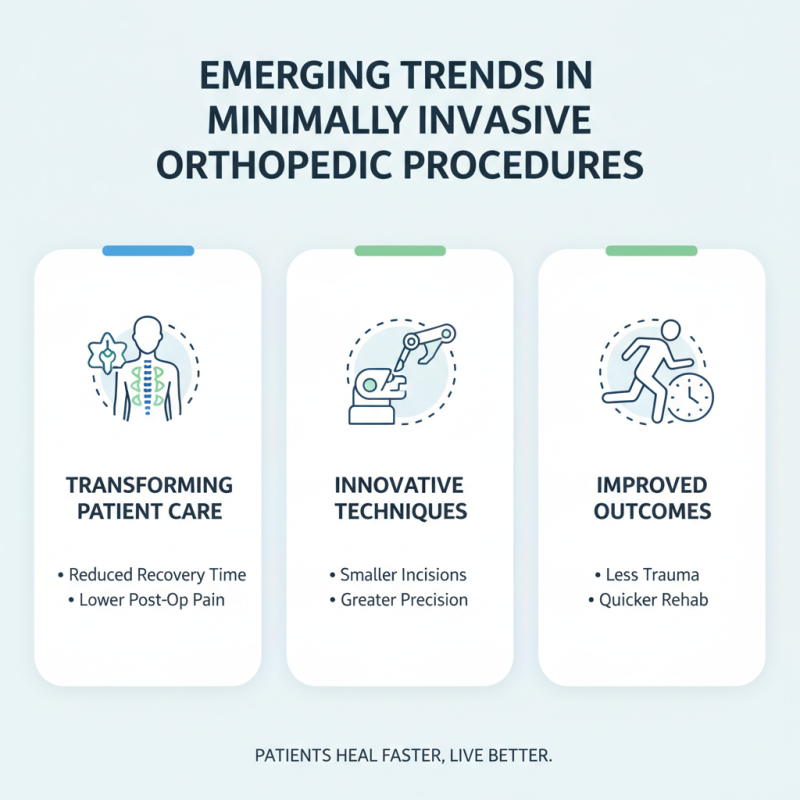
Minimally invasive orthopedic procedures are transforming patient care. These innovative techniques offer several advantages, including reduced recovery time and lower post-operative pain. Surgeons employ advanced technologies that allow for smaller incisions and greater precision. Patients experience less trauma and quicker rehabilitation, leading to improved outcomes.
Emerging trends in this field emphasize the use of robotic-assisted surgeries. Robotics enhances the surgeon's capabilities. This technology improves accuracy during procedures and can lead to fewer complications. Additionally, augmented reality (AR) is gaining traction in surgical planning and visualization. It offers real-time data to guide surgeons, making complex procedures more manageable.
While these advancements are promising, some challenges remain. The cost of new technologies can be a barrier to widespread adoption. Not all facilities are equipped for the latest innovations. There is also a learning curve for surgeons. Training and experience are crucial to ensure safety and effectiveness. The path forward requires ongoing education and adaptation.
Patient-Centric Solutions in Orthopedic Surgery Equipment Development
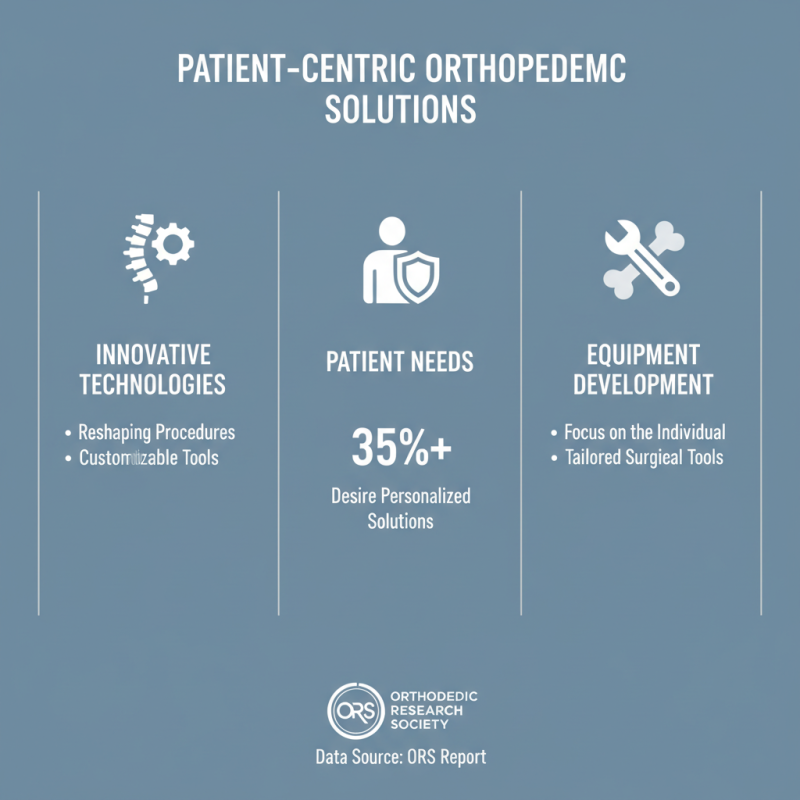
The development of orthopedic surgery equipment increasingly focuses on patient-centric solutions. Innovative technologies are reshaping how orthopedic procedures are performed. According to a report by the Orthopedic Research Society, over 35% of patients express a need for personalized surgical solutions that cater to their unique needs. This shift highlights the importance of customizability in surgical tools.
Emerging technologies, such as 3D printing, enable the creation of tailored implants that improve patient outcomes. A study from the Journal of Orthopedic Surgery indicated that patients with custom implants experience a 20% reduction in recovery time. Yet, challenges remain. Not all facilities have access to the latest technologies, leaving some patients behind.
Additionally, patient feedback is crucial. A survey found that 60% of surgeons value patient input in equipment design. However, negative experiences still occur. As the industry strives for improvement, understanding patient perspectives can lead to more effective inventions. Continuous reflection on these aspects is necessary to bridge gaps in patient-centered care.