Best General Surgical Instruments Names You Should Know?
In the field of surgery, understanding various instruments is crucial. "General surgical instruments with names" play a vital role in ensuring successful outcomes. According to a 2021 report by the Global Surgical Instruments Market, the industry is projected to reach $16 billion by 2026, highlighting its significance. Dr. Emily Chen, a leading expert in surgical tools, stated, "Knowing each instrument's name and purpose is key to a surgeon's efficiency."
Surgical instruments serve distinct roles, from scalpels to forceps. Each tool has unique features that enhance surgical precision. However, many surgeons struggle to remember all their names. The rapid evolution of surgical technology complicates this further. Even with various resources, retaining knowledge remains a challenge. This knowledge gap highlights the need for continual education in this rapidly advancing field.
As surgeons encounter unfamiliar tools, they must adapt quickly. Mistakes can happen if tools are misidentified. This can lead to delays in surgery and affect patient safety. Therefore, reinforcing the names and functions of "general surgical instruments with names" is imperative for healthcare professionals. Continual practice and training are essential in bridging this knowledge gap.
Essential Surgical Instruments Used in General Surgery
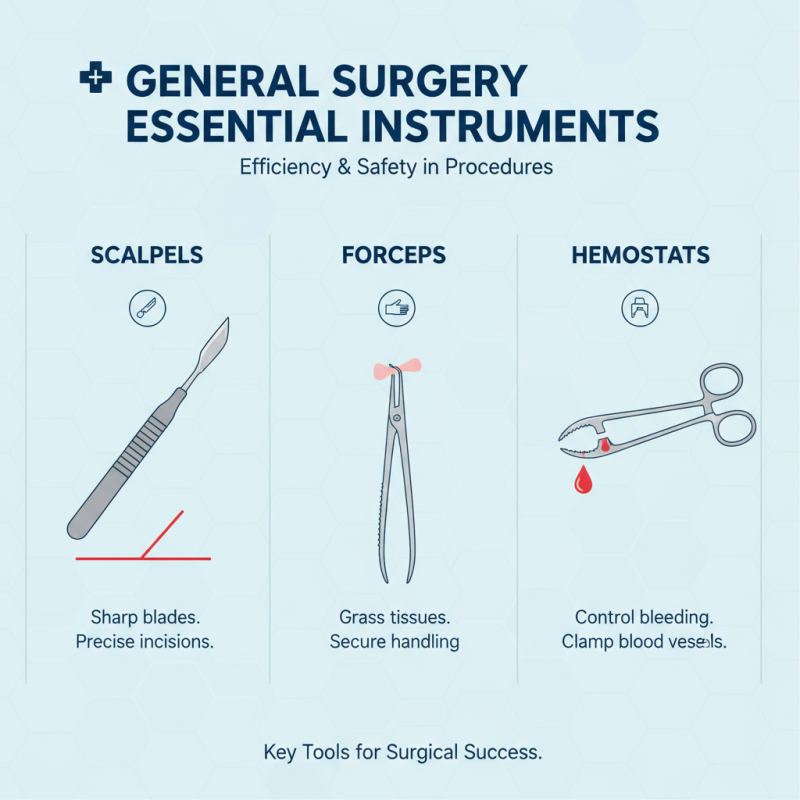
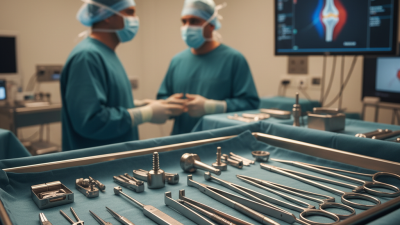
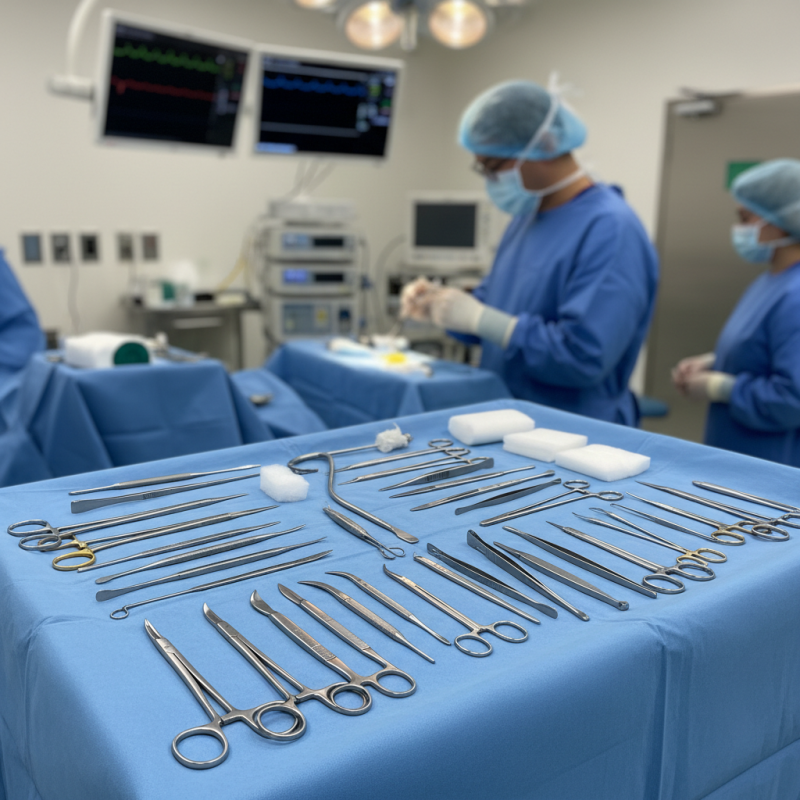
In general surgery, a variety of instruments play vital roles. Understanding these essential tools enhances both efficiency and safety during procedures. Commonly used instruments include scalpels, forceps, and hemostats. Scalpels are sharp blades for making precise incisions. Forceps grasp tissues during surgeries. Hemostats control bleeding by clamping blood vessels.
Another important instrument is the suturing needle. This needle helps in closing incisions with precision. Surgical scissors also come in different shapes and sizes, each designed for specific tasks. Some are meant for cutting tissue, while others are better for sutures.
Despite advancements, challenges remain. Instruments can wear out or become damaged. Their effectiveness hinges on proper maintenance. Additionally, not every surgeon may be familiar with all tools. This gap can impact procedural outcomes. Continuous training is essential for surgical teams to stay adept with their instruments. The nuances of each tool require ongoing practice and patience. Hence, understanding surgical instruments is not just about knowing their names but mastering their use.
Commonly Used Scissors in Surgical Procedures
Surgical scissors are vital tools in any operating room. They come in various shapes and sizes, each designed for specific tasks. Commonly used types include Metzenbaum scissors, dissecting scissors, and Mayo scissors. According to industry reports, around 30% of all surgical instruments used in procedures are scissors.
Metzenbaum scissors are excellent for delicate tissue dissection. Their long handles and pointed tips allow for precision. Each cut needs meticulous control.
On the other hand, Mayo scissors are robust and ideal for cutting through tougher tissues. Their wider blades can handle dense material effectively, but they require skill to avoid damaging surrounding structures.
Using the correct type of scissors can make a significant difference in surgical outcomes. However, some surgeons tend to use the wrong scissors out of habit. This can lead to complications. There is a need for ongoing training in instrument selection. Ensuring that the right tool is used can reduce patient risks and improve recovery times.
Importance of Forceps in General Surgical Practices
Forceps play a vital role in general surgical practices. These instruments are designed to grasp, hold, and manipulate tissues effectively. In surgeries, precision is key. Surgeons use various types of forceps, such as tissue forceps and hemostatic forceps, each serving specific needs. They help in applying gentle pressure without causing damage, which is essential during delicate operations.
The importance of forceps extends beyond their functionality. They require proper handling and skill. A surgeon’s experience can greatly influence the outcome of a procedure. Sometimes, even slight miscalculations can lead to complications. It’s crucial for medical professionals to continuously refine their technique. Choosing the right type of forceps can make a difference, yet not every surgeon may realize this.
While forceps are indispensable, over-reliance on them can lead to errors. Some surgeons might become complacent, relying too much on these tools rather than honing their tactile skills. This balance between instrument use and manual dexterity is an ongoing challenge in the surgical field. Training and practice remain essential for success. The journey of mastering forceps requires continuous reflection and adaptation.
Understanding Scalpels and Their Varieties
Scalpels are essential tools in general surgery. They come in various types, each designed for specific tasks. According to a report by Market Research Future, the global surgical instruments market is expected to exceed $12 billion by 2025. Scalpels play a significant role in driving this demand, as precision is critical in surgical procedures.
There are disposable and reusable scalpels. Disposable ones are convenient and reduce infection risk. Reusable scalpels, made of high-quality materials, can be sterilized and used multiple times. Each type has its pros and cons. Disposable scalpels offer ease of use, while reusable scalpels can be more economical. This choice often depends on the surgeon's preference and the surgical setting.
Understanding various scalpel types is crucial for surgeons. Classic scalpels have straight blades. They are versatile and suitable for various incisions. However, curved blades offer unique advantages. They are better for deeper cuts but may increase the risk of cutting surrounding tissues inadvertently. Each option comes with its own challenges and requires a surgeon’s discretion. Ultimately, the choice of scalpel impacts surgical outcomes and patient safety.
Key Surgical Graspers and Their Functions
Surgical graspers are essential tools in the operating room. They enable surgeons to hold, manipulate, and stabilize tissues during procedures. The right choice of grasper can significantly impact surgical outcomes. This makes it critical for medical professionals to understand their variations and functions.
One type of surgical grasper is the tissue forceps. They feature serrated tips, providing a secure grip on various tissue types. Studies show that using the correct tissue forceps can reduce tissue trauma by up to 30%. Another common type is the allis clamp. Its design allows for a powerful grip on tissue but can be damaging if used improperly. Surgical teams must train carefully to avoid such risks.
The development of graspers has evolved, with many now featuring additional functionalities. Some may include built-in electrocautery capabilities. While these innovations can enhance surgical performance, they also require extensive training. This can lead to confusion among teams if not adequately addressed. Ongoing education is crucial in ensuring all staff understand both the benefits and limitations of these advanced tools.
Best General Surgical Instruments: Key Surgical Graspers and Their Functions