How to Choose the Right Bone Screws for Your Medical Needs?
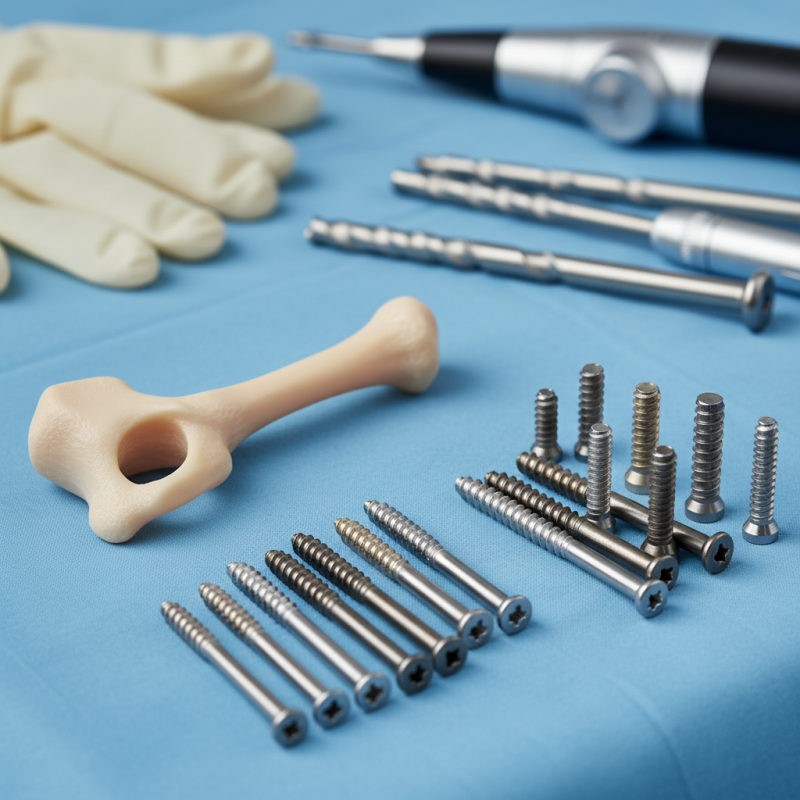
Choosing the right bone screws is crucial in medical procedures. These small devices play a significant role in stabilizing bones and aiding recovery. Bone screws come in various sizes and materials, each serving different needs. The selection process can be overwhelming. It’s important to understand specific requirements.
When selecting bone screws, consider compatibility with the prosthesis and the patient’s anatomy. A mismatch could lead to complications. Materials like titanium and stainless steel offer different benefits. Each type presents unique advantages and disadvantages. Taking the time to weigh these factors is essential.
Reflection on past choices can provide valuable insights. Learning from previous experiences helps in making better decisions. Discussions with medical professionals can illuminate specific needs. Remember, the effectiveness of bone screws hinges on thoughtful selection and application.
Understanding the Different Types of Bone Screws Available
When selecting bone screws, understanding the types available is crucial. Bone screws can be classified based on their material, shape, and function. The most common materials include stainless steel and titanium. According to industry reports, titanium screws are often preferred due to their biocompatibility and lower risk of corrosion. However, stainless steel screws provide excellent strength and are generally more affordable.
Different screw types are designed for various applications. Cortical screws are used in dense bone, while cancellous screws work well in softer bone. Studies reveal that using the appropriate screw type reduces the risk of complications by up to 30%. Additionally, some screws feature unique designs, like self-tapping threads or locking mechanisms, which enhance stability. Choosing the right design can significantly impact healing outcomes.
The choice of bone screws may also depend on the specific surgical procedure. For instance, certain orthopedic surgeries may necessitate specialized screws designed for fracture fixation or joint stabilization. Inadequate selection may lead to issues such as loosening or nonunion. It's essential to weigh the pros and cons of each option before making a decision. The correct bone screw selection can profoundly influence recovery times and patient satisfaction.
Bone Screws Selection Guide
This chart represents the estimated number of uses of different types of bone screws in thousands. Understanding the usage can help in selecting the appropriate screws based on medical needs.
Key Factors to Consider When Choosing Bone Screws
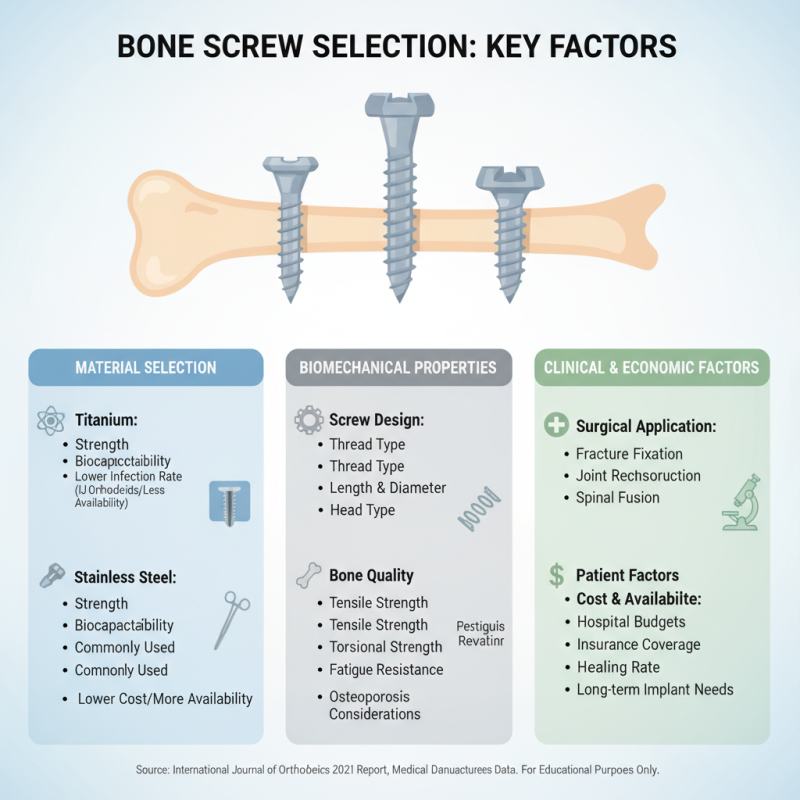
When choosing bone screws for medical applications, several key factors must be considered. Material selection is critical. Titanium and stainless steel are popular due to their strength and biocompatibility. A 2021 report by the International Journal of Orthopedics noted that titanium screws have lower rates of infection compared to other materials. However, cost and availability vary widely, which can affect the decision.
Another important factor is screw size and design. Dimensions impact stability and fixation. A recent study indicated that properly sized screws decrease the risk of refracture. Surgeons often face challenges in balancing screw length with the need for solid anchorage. An improperly sized screw can lead to inadequate fixation and complications. Experts suggest that understanding anatomical variations in patients is essential in achieving optimal outcomes.
Surgeons’ experience and preferences also play a role. Choices are often influenced by past successes or failures with certain screw types. This subjectivity can lead to inconsistencies. Moreover, new designs and technologies emerge rapidly, making it hard to stay updated. Emphasis on continued education is vital in ensuring that practitioners are informed about the latest advances in bone screw technology.
Assessing Materials and Coatings for Bone Screws
Choosing the right materials for bone screws is crucial. Different situations call for specific materials. Common options include titanium and stainless steel. Titanium offers excellent biocompatibility, reducing the risk of rejection. It's lightweight and strong, making it a popular choice.
Coatings also play an essential role. Some screws have coatings that enhance durability and reduce friction. Hydroxyapatite is a common coating, promoting bone growth. However, not all coatings are suitable for every surgery. You must consider the patient's needs when selecting these.
Sometimes, it can be overwhelming to decide. Some surgeons may lean toward familiar choices without considering new options. It’s beneficial to reflect on past cases and outcomes. Each material and coating has its trade-offs. Understanding these can lead to better decisions.
How to Choose the Right Bone Screws for Your Medical Needs? - Assessing Materials and Coatings for Bone Screws
| Material |
Coating Type |
Corrosion Resistance |
Biocompatibility |
Typical Uses |
| Titanium |
Anodized |
Excellent |
High |
Orthopedic implants |
| Stainless Steel |
Plasma Spray |
Moderate |
Good |
Dental applications |
| Cobalt-Chromium |
Chromate |
High |
High |
Joint replacements |
| Polyether Ether Ketone (PEEK) |
None |
Good |
Excellent |
Spinal surgery |
Evaluating Screw Sizes and Lengths for Specific Procedures
Choosing the right bone screws is crucial for successful medical procedures. Each surgery has unique requirements. Evaluating screw sizes and lengths can be complex. Different factors affect these choices. Surgeons must consider the type of bone involved. The conditions of the bone also play a significant role.
In some cases, a longer screw provides better fixation. However, it may require more invasive procedures. Choosing a shorter screw can minimize tissue trauma. Still, it might not achieve the needed stability. Therefore, surgeons should carefully assess the specific anatomy. They might overlook important details in complex cases.
Understanding the mechanical properties of screws is essential. The material can impact performance too. Osteoporotic bone requires different screw dimensions than healthy bone. Empty spaces can lead to screw loosening. It is vital to strike a balance between length and size. Mistakes can impact patient outcomes significantly. Every detail matters in the decision-making process.
Best Practices for Bone Screw Selection in Surgical Settings
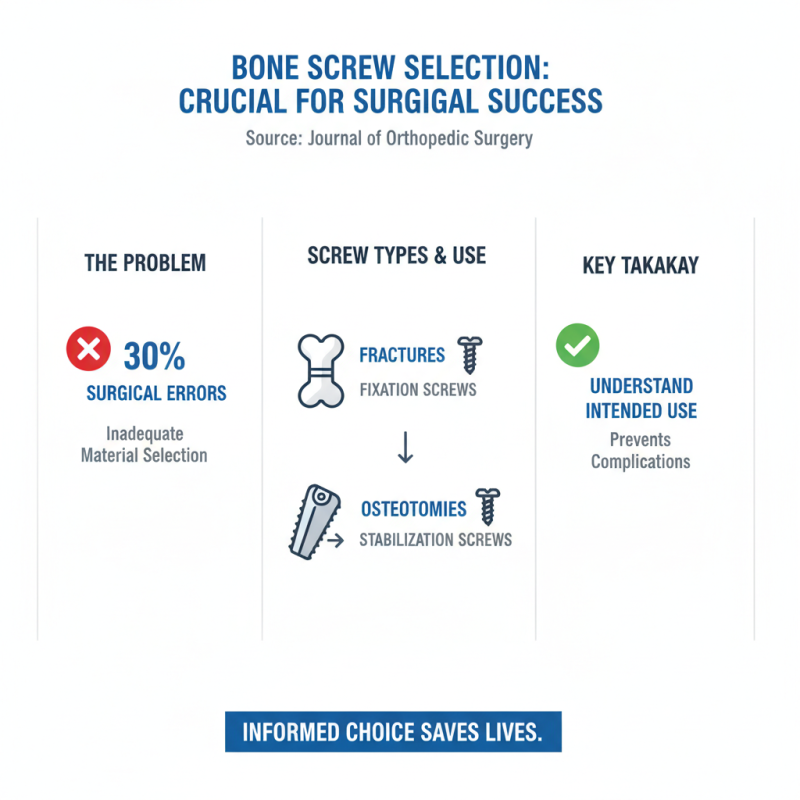
Selecting the right bone screws is crucial in surgical settings. Improper choices can lead to complications. A study published in the Journal of Orthopedic Surgery indicates that nearly 30% of surgical errors arise from inadequate material selection. Surgeons encounter various types of screws. Understanding the intended use is vital. For fractures, use screws designed for fixation. For osteotomies, choose those suitable for stabilization.
Material matters. Titanium screws are lightweight and biocompatible. Stainless steel offers strength but is heavier. According to a report from MedTech Insights, approximately 70% of surgeons prefer titanium due to its lower infection rates. Surgeons should also evaluate screw size and length. Too long can damage surrounding tissue. Too short may lack proper fixation.
Constant review of available options is needed. Technologies evolve rapidly, and new designs emerge. Feedback from colleagues can provide valuable insight. A systematic approach to selecting screws can reduce risks. Ignoring these aspects may lead to poor outcomes. Always stay informed, as decision-making directly impacts patient care.