How to Choose Orthopedic Surgery Tools for Global Buyers
Choosing orthopedic surgery tools for global buyers requires more than comparing prices, brands, or catalog photographs. A reliable decision connects clinical purpose, surgeon experience, sterilization capacity, training, and service support. The World Health Organization’s Global Patient Safety Action Plan 2021–2030 emphasizes safe medical devices, competent use, and stronger procurement systems. Its message is clear: equipment quality alone cannot guarantee patient safety.
Market data also deserves careful reading. Fortune Business Insights reports that the global orthopedic devices market reached approximately USD 52.65 billion in 2023 and may exceed USD 80 billion by 2032. However, this category includes implants, equipment, and instruments. It should not be treated as a precise forecast for orthopedic surgery tools. That distinction matters. A buyer in Germany may prioritize reusable stainless-steel instruments and validated reprocessing. A hospital in Kenya may need durable sets, local training, and dependable replacement parts. The same product can perform differently in real operating rooms.
Orthopedic surgeon Dr. Freddie Fu repeatedly stressed the importance of restoring normal anatomy. His practical principle was: “The key to success is restoring normal anatomy.” That idea should guide instrument selection. A bone saw, retractor, drill guide, or torque-limiting driver must support accurate, repeatable technique. Look beyond polished brochures. Ask about material traceability, ergonomic testing, cleaning instructions, shelf-life, warranty response, and regulatory documentation. ISO 13485 certification can support confidence, but it does not replace clinical evaluation. I would not pretend that one universal checklist fits every country. Buyer judgment remains essential. Small details matter. A loose handle can change an entire procedure.
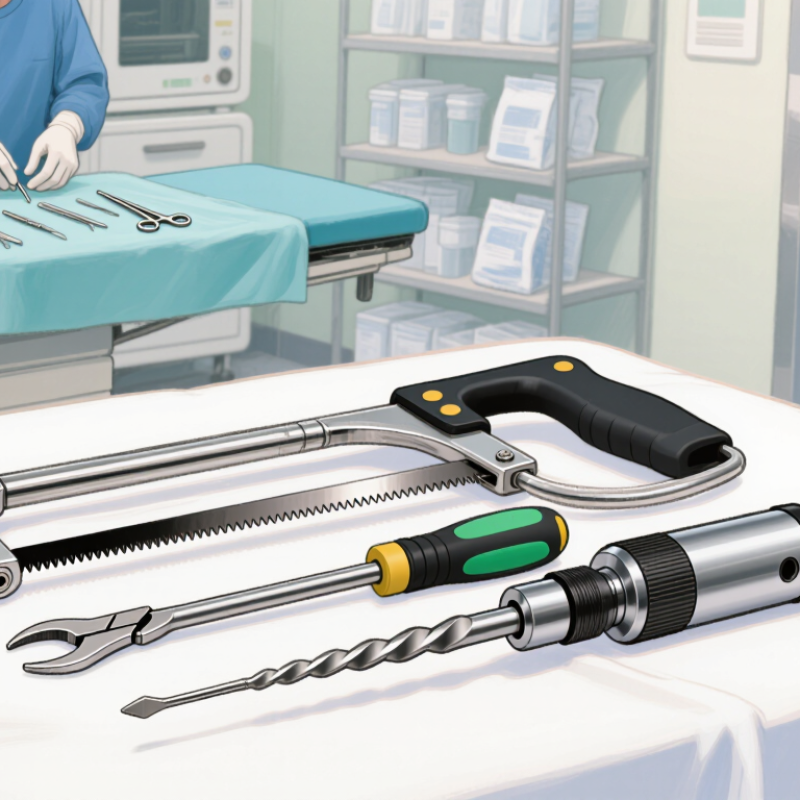
Understanding Orthopedic Surgery Tool Categories and Clinical Applications
How to Choose Orthopedic Surgery Tools for Global Buyers
Orthopedic tools should be selected by clinical purpose, not catalog size. Musculoskeletal conditions affect about 1.71 billion people worldwide, according to the World Health Organization’s 2022 report. This demand includes trauma care, joint reconstruction, sports medicine, and spinal procedures. Each area requires different instruments, handling methods, and sterilization controls.
Cutting and drilling systems support fracture repair and bone preparation. Reduction tools help restore alignment before fixation. Plates, screws, wires, and intramedullary devices stabilize damaged bone. Arthroplasty instruments prepare joint surfaces with controlled sizing and depth. Arthroscopy tools need slim profiles and reliable fluid management. Small details matter. A poorly balanced handle may increase fatigue during a long case. Excessive vibration can also reduce control.
Global buyers should verify material traceability, corrosion resistance, cleaning instructions, and compatibility with existing equipment. The Lancet Commission on Global Surgery estimated that five billion people lack access to safe, affordable surgical care. Tools must therefore suit both advanced hospitals and facilities with limited resources. Manual systems may be easier to maintain, while powered systems can improve speed and precision. The choice is not always obvious. A lower purchase price may create higher training and maintenance costs. Buyers should review clinical evidence, regulatory documentation, service capacity, and user feedback before approval. Surgical volume, surgeon preference, and local sterilization practice deserve equal attention.
How to Choose Orthopedic Surgery Tools for Global Buyers
Understanding orthopedic surgery tool categories and their primary clinical applications
The chart compares major orthopedic instrument categories by the number of representative tool types commonly used in their primary clinical applications. Cutting and preparation instruments support bone shaping and access, drilling and tapping tools prepare fixation sites, reduction instruments assist with fracture alignment, fixation instruments stabilize bone, and measuring or guiding tools improve procedural accuracy. Buyers should also evaluate material quality, sterilization compatibility, ergonomics, power requirements, and regulatory documentation.
Defining Surgical Requirements, Patient Needs, and Procedure Compatibility
Before comparing orthopedic surgery tools, define the procedure precisely. Is it fracture fixation, joint reconstruction, or minimally invasive work? Each task demands different geometry, reach, force control, and imaging access. A retractor for a deep approach may obstruct the fluoroscope. Small details matter.
Patient factors change the selection. Bone density, anatomy, age, allergies, and infection risk should be reviewed with the clinical team. A narrow instrument may suit a small incision, yet fail with thick tissue or limited exposure. Handle texture matters when gloves are wet. Weight matters during a long case. The material should tolerate the planned sterilization cycle, and its documentation should support traceability.
Compatibility requires more than matching a catalog description. Check interfaces, shaft diameters, locking systems, power connections, and alignment with existing trays. Trial the tool in a simulated procedure, using the actual imaging position when possible. Ask whether staff can assemble, clean, inspect, and store it correctly. No selection process is flawless. A checklist can still miss a surgeon’s preference or a patient’s unusual anatomy. That weakness deserves review before purchase, not after the operation. Local regulatory requirements and validated instructions must guide the final decision.
Evaluating Material Quality, Design, Ergonomics, and Instrument Precision
Choosing orthopedic surgery tools for global use requires more than comparing prices. Material quality is the first practical checkpoint. Stainless steel should resist corrosion, repeated sterilization, and surface wear. Ask for material certificates, hardness data, and batch traceability. Inspect the joints closely. Rough edges, uneven teeth, or weak locking mechanisms can affect surgical control. A polished surface may look impressive but reveal little about long-term performance.
Design should support the procedure, not complicate it.
Instruments need balanced weight, clear markings, and compatible dimensions. Handles should fit different hand sizes without forcing excessive grip pressure. During evaluation, hold each tool with gloves and simulate repeated movements. Small ridges can become painful after several minutes. Ergonomics is often judged too quickly. That is a mistake. User feedback from surgeons, nurses, and sterilization staff can expose problems that product sheets miss.
Precision deserves measurable evidence.
Cutting edges should meet defined tolerances, while clamps must close evenly without unnecessary play. Request inspection records, calibration methods, and functional test results. Samples should be tested after cleaning and sterilization cycles, not only when new. I once trusted a smooth instrument too early; its alignment changed under repeated use. That experience remains useful. Buyers should compare several samples, document findings, and question any result that seems unusually perfect. Clear technical communication also matters when tools cross languages, facilities, and operating practices.
Comparing Sterilization, Maintenance, Regulatory, and Supplier Standards
How to Choose Orthopedic Surgery Tools for Global Buyers
Sterilization performance should guide every orthopedic tool purchase. Ask for validated instructions covering cleaning, inspection, packaging, and sterilization cycles. A tool that tolerates steam may fail under repeated exposure to moisture or harsh detergents. Check hinges, serrations, and narrow channels carefully. Small residue can remain unseen. Request test evidence, material specifications, and clear reprocessing limits. ISO 17664-based instructions can support consistent processing, but local hospital procedures still matter.
Maintenance requirements affect safety and operating costs. Examine whether joints open smoothly after repeated cycles. Confirm access to replacement parts, repair training, inspection gauges, and service records. A useful supplier should explain expected wear, not promise permanent performance. Track serial or lot information from receipt through clinical use. This supports traceability during audits or field concerns. I would also test a small sample before a large order. Catalog descriptions rarely reveal awkward grip angles or difficult cleaning points.
Regulatory review must match the destination market. Check registration status, labeling language, technical files, and declarations from the supplier. Do not rely on one certificate alone. Supplier quality systems, such as ISO 13485, are valuable evidence, but they do not replace local requirements. Evaluate audit access, complaint handling, change notifications, and delivery consistency. Ask how the supplier manages material substitutions. That detail is often overlooked. A lower price may hide training gaps, delayed repairs, or incomplete documentation. The final decision should balance clinical usability, validated processing, maintenance support, regulatory readiness, and supplier transparency.