


In modern orthopedic surgery, precision and stability are essential for successful patient outcomes. Among the innovations that have transformed fracture fixation and reconstructive procedures, secure locking screws stand out as indispensable tools. Designed to provide rigid fixation and improve surgical efficiency, these screws are widely used in conjunction with orthopaedic implants, spine implants, maxillofacial implants, large fragment implants, interlocking nails, and other advanced fixation systems.
Choosing the right locking screw can significantly influence healing time, stability, and overall surgical success.
What Are Secure Locking Screws?
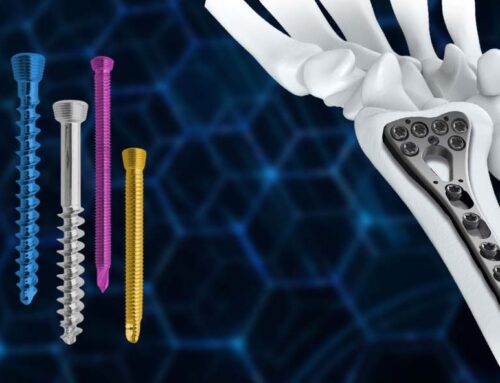
Secure locking screws are specialized fasteners that connect directly to locking plates or other orthopedic devices to create a fixed-angle construct. Unlike traditional screws, which rely on friction between the screw and bone, locking screws lock into the plate itself. This design prevents micromotion, reduces the risk of screw loosening, and ensures better stability, even in patients with compromised bone quality.
The mechanical advantage of secure locking screws has made them a cornerstone in trauma surgery, joint reconstruction, spinal fixation, and maxillofacial procedures. They are particularly useful in combination with interlocking nails, large fragment implants, and spine implants, where rigid fixation is critical.
Key Benefits of Secure Locking Screws
Enhanced Stability and Fixation
- One of the primary advantages of secure locking screws is their ability to provide stable fixation, even in weak or osteoporotic bones. The fixed-angle construct ensures that the plate and screw act as a single unit, reducing the risk of implant failure.
Reduced Bone Damage
- Traditional screws compress the bone against the plate, sometimes causing microfractures or reduced blood supply. Secure locking screws minimize this risk by distributing forces evenly, which preserves bone integrity and promotes faster healing.
Versatility Across Bone Types
- Secure locking screws are compatible with a wide range of orthopaedic implants. Whether used for interlocking nails in long bones, large fragment implants for load-bearing regions, or delicate maxillofacial implants, these screws provide reliable support across anatomical sites.
Minimized Risk of Screw Loosening
- By locking into the plate, these screws eliminate the micromotion that can lead to loosening, a common problem with conventional screws. This ensures long-term stability and reduces the need for revision surgery.
Support for Complex Fractures
- Complex fractures, especially multi-fragmentary or intra-articular fractures, require secure fixation. Locking screws allow surgeons to maintain proper alignment and restore function even in challenging cases.
Types of Secure Locking Screws
Locking screws are available in several designs to meet specific surgical requirements:
Cortical Locking Screws
- Designed for dense cortical bone in diaphyseal (shaft) regions.
- Used with large fragment implants or spine implants for rigid fixation.
Cancellous Locking Screws
- Feature a larger thread pitch for softer cancellous bone found in metaphyseal regions.
- Commonly used near joints and in maxillofacial implants.
Monoaxial Locking Screws
- Lock at a fixed angle, providing strong, rigid fixation.
- Ideal for standard fracture stabilization and load-bearing bones.
Polyaxial Locking Screws
- Allow slight angular flexibility when locking into the plate.
- Useful in anatomically complex regions such as the pelvis or distal femur.
Self-Tapping Locking Screws
- Cut their own thread in the bone, eliminating pre-drilling in some cases.
- Reduce surgical time and simplify the procedure, especially with interlocking nails.
Applications of Secure Locking Screws
Trauma Surgery
- Secure locking screws are widely used in trauma surgeries to stabilize fractures of long bones like the femur, tibia, and humerus. They work in combination with large fragment implants or interlocking nails to provide early mobility and faster recovery.
Spine Surgery
- In spinal procedures, locking screws are integral to spine implants, including pedicle screw-rod systems and interbody fusion devices. They ensure vertebral stability, correct deformities, and support spinal fusion in cases of trauma, scoliosis, or degenerative disorders.
Joint Reconstruction
- For patients requiring hip implants, secure locking screws anchor prostheses in place, ensuring optimal alignment and long-term function. They reduce the risk of loosening and allow patients to regain mobility more quickly.
Maxillofacial Surgery
- Maxillofacial implants rely on secure locking screws to reconstruct facial bones after trauma, congenital deformities, or tumor resections. Their precision and stability are critical for restoring both function and aesthetics.
Pediatric Orthopedics
- Locking screws are adapted for smaller, pediatric implants to stabilize fractures while minimizing trauma to growing bones.
How Secure Locking Screws Integrate with Orthopedic Implants
Secure locking screws are not standalone devices; they are part of an integrated system designed to restore anatomical alignment and stability. They work in tandem with various implants:
- Locking Plates – Create a rigid fixed-angle construct for fracture fixation.
- Interlocking Nails – Secure the nail at both ends to control rotation and axial movement.
- Large Fragment Implants – Stabilize weight-bearing bones in high-stress areas.
- Spine Implants – Anchor rods and plates in spinal fixation procedures.
- Maxillofacial Implants – Provide stability in reconstructive facial surgery.
This integration ensures that the implants and screws function as a cohesive unit, improving surgical outcomes and patient recovery.
Advantages in Modern Orthopedic Surgery
Secure locking screws have several advantages that make them indispensable in modern orthopedic surgery:
- Faster Recovery – Stable fixation allows early mobilization, reducing hospital stay and rehabilitation time.
- Lower Complication Rates – Reduced risk of screw loosening and implant failure.
- Improved Surgical Precision – Advanced screw designs enable accurate placement, even in complex fractures.
- Versatility – Suitable for trauma, joint reconstruction, spinal surgery, and maxillofacial procedures.
- Enhanced Patient Outcomes – Improved alignment, function, and long-term durability.
Innovations in Secure Locking Screws
The orthopedic industry continues to advance the design and functionality of locking screws:
- Titanium Alloy Screws – Lightweight, strong, and biocompatible.
- Low-Profile Screws – Minimize soft tissue irritation in areas with minimal coverage.
- Smart Locking Systems – Incorporate navigation and robotic guidance for precise placement.
- Bioabsorbable Screws – Dissolve naturally after bone healing, reducing the need for removal.
These innovations make secure locking screws more effective, versatile, and patient-friendly.
Conclusion
Secure locking screws are a game-changer in the field of orthopedic surgery. By providing superior stability, preserving bone biology, and integrating seamlessly with orthopedic implants, interlocking nails, hip implants, spine implants, maxillofacial implants, and large fragment implants, they ensure better surgical outcomes and faster recovery for patients.
Whether it is complex trauma fixation, joint reconstruction, spinal correction, or facial reconstruction, locking screws are essential for achieving precision, stability, and durability. For surgeons and healthcare providers, selecting the right locking screw system is a critical factor in delivering successful, long-lasting results.
With ongoing innovation and advancements in materials and design, secure locking screws continue to set the standard for excellence in orthopedic and reconstructive surgery. Patients and surgeons alike benefit from their reliability, versatility, and contribution to improved quality of life after surgery.

Leave A Comment