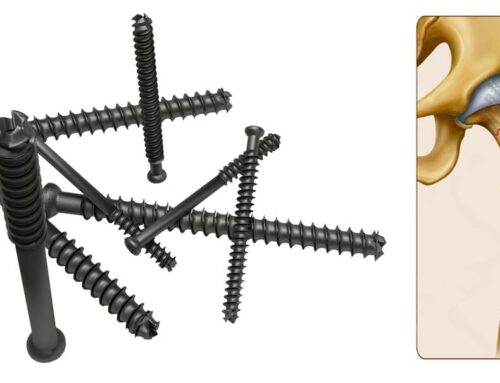
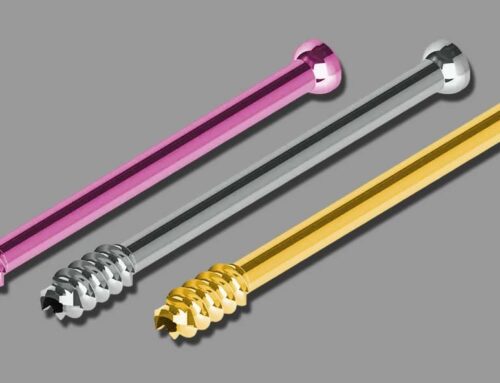
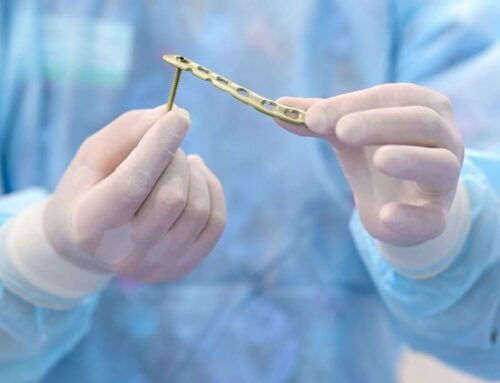
Cannulated Screws are specialized orthopedic implants used to treat fractures, perform osteotomies, and fix bones during surgeries. These screws have a central hollow core (cannulation) that allows them to be inserted over a guide wire or pin, enabling precise placement, especially in minimally invasive or image-guided procedures.
Types of Cannulated Screws
Here’s a detailed breakdown of the types of cannulated screws, based on design, function, thread configuration, and use cases in orthopedic surgeries:
Partial Thread Cannulated Screws
- Description: These screws have threading on only a portion of the shaft (usually the distal part).
- Function: Creates interfragmentary compression by allowing the proximal smooth portion to glide through the bone while the threaded portion anchors into the opposite fragment.
- Use Cases: Femoral neck fractures, Ankle fractures (medial malleolus) and Scaphoid fractures
- Advantage: Excellent for lag screw technique, pulling two bone fragments tightly together.
Fully Threaded Cannulated Screws
- Description: Threads cover the entire shaft of the screw.
- Function: Provides uniform fixation and stability across the full length of the screw.
- Use Cases: Diaphyseal fractures, Arthrodesis procedures (joint fusion), and Metaphyseal fractures where compression is not required
- Advantage: Maintains alignment and prevents telescoping or shortening of bone fragments.
Headed Cannulated Screws
- Description: Have a solid head on the proximal end, sometimes used with washers.
- Function: Provides a strong purchase point for driving the screw and applying compression.
- Use Cases: Long bone fractures and Fractures requiring additional surface compression
- Advantage: Offers more torque during insertion and enhanced fixation strength.
Headless Cannulated Compression Screws (HCCS)
- Description: No prominent head; screw is buried flush or below the bone surface.
- Function: Allows compression across the fracture site with minimal prominence.
- Use Cases: Scaphoid fractures, Metacarpal/metatarsal fractures, Small joint arthrodesis (e.g., toe, finger)
- Advantage: Minimizes irritation of soft tissue or joints. often has variable pitch threading to create compression without a head.
Variable Pitch Cannulated Screws
- Description: The pitch (distance between threads) varies along the screw shaft—typically coarser at the tip and finer near the head.
- Function: Generates gradual compression as the screw is inserted.
- Use Cases: Intra-articular fractures and Nonunion or delayed union fractures
- Advantage: Allows for controlled, automatic compression without overtightening.
Cannulated Lag Screws
- Description: Specifically designed to function as lag screws, either fully or partially threaded.
- Function: Creates compression between bone fragments.
- Use Cases: Acetabular or pelvic fractures and High-stress bone areas
- Advantage: Excellent for fragment fixation where strong compression is needed.
Cannulated Screws for Specific Anatomical Locations
Cannulated Cancellous Screws:
- Typically, larger diameter and coarse threads.
- Used in spongy (cancellous) bone, like in the femoral head, humeral head, or calcaneus.
Cannulated Cortical Screws:
- Finer threads, smaller diameter, used in dense cortical bone.
- Less common but available for specific diaphyseal applications.
Benefits of Cannulated Screws
Here are the detailed benefits of cannulated screws, which make them a popular choice in modern orthopedic and trauma surgeries:
Precision Placement Over Guide Wire
- Cannulated screws are designed to be inserted over a guide wire or Kirschner wire (K-wire).
- This minimizes the risk of misplacement, especially in deep or anatomically complex areas like the femoral neck, pelvis, or scaphoid.
- Ensures accurate trajectory and alignment during fixation.
Minimally Invasive Technique
- Enables percutaneous (small incision) insertion, reducing soft tissue damage.
- Leads to: Less blood loss, Faster recovery, Lower risk of infection and Shorter hospital stay
- Particularly beneficial in elderly or polytrauma patients.
Versatility Across Anatomical Sites
- Available in various lengths, diameters, and thread configurations.
- Used in:
- Long bone fractures (femur, tibia, humerus)
- Small bone fractures (scaphoid, metatarsals, phalanges)
- Joint fusions and osteotomies
- Suitable for both cancellous and cortical bone applications.
Controlled Compression at Fracture Site
- Partial thread and variable pitch designs allow interfragmentary compression, which Promotes primary bone healing, improves stability of fracture and Reduces the risk of nonunion
- Ideal for lag screw technique.
Reduced Soft Tissue and Joint Irritation
- Headless cannulated screws are buried within the bone, avoiding protrusion.
- Ideal for intra-articular or small bone areas (e.g., wrist, foot).
- Prevents soft tissue irritation and reduces the need for later screw removal.
Radiolucent Compatibility for Fluoroscopy
- The guide wire and hollow core make them easy to visualize and guide under X-ray or C-arm fluoroscopy.
- Ensures real-time correction of screw position during surgery.
Time-Saving and User-Friendly Design
- Streamlines surgical workflow by eliminating the need for extensive exposure or dissection.
- Quick and easy insertion over a pre-placed guide wire.
- Beneficial in both elective surgeries and emergency trauma cases.
Ideal for Complex and Fragile Bones
- Excellent for osteoporotic bones, where precision is critical to avoid fragmentation.
- Common in geriatric patients, especially for femoral neck and intertrochanteric fractures.
Multiple Configurations and Customization
- Comes in different thread lengths, diameters, head options (headed/headless), and materials (titanium or stainless steel).
- Surgeons can customize based on fracture pattern, bone quality, and surgical goal.
Reduced Risk of Implant Prominence
- Especially with headless designs, the screws stay buried and are less likely to cause issues like: Tendon irritation, Joint restriction and Soft tissue impingement.