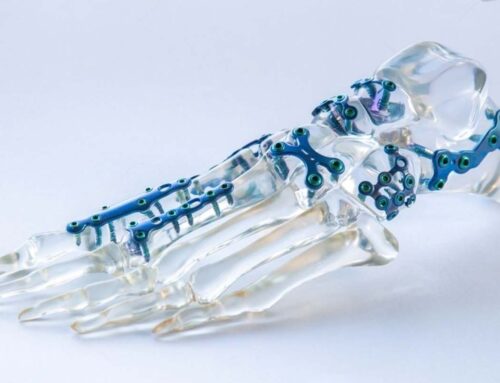
In orthopedics, a Small Fragment Instrument Set is a surgical tool kit specifically designed for procedures involving small bones or bone fragments—typically in the hand, wrist, forearm, ankle, or foot. These instruments are used to assist in the fixation of fractures using small fragment plates and screws, usually in the 3.5 mm system category.
Key Components of a Small Fragment Instrument Set:
Drill Guides (Sleeves)
- Purpose: To guide drill bits precisely through the correct path when drilling holes in the bone.
- Design: Usually made of stainless steel, available in sizes like 2.5 mm or 3.5 mm.
- Functionality: Ensures alignment for accurate screw placement and prevents the drill from slipping or damaging soft tissues.
Drill Bits
- Common Sizes: 2.5 mm and 3.5 mm (corresponding to the diameter of the screws used).
- Purpose: To create pilot holes in the bone before screw insertion.
- Type: Generally, twist drills; autoclavable and reusable or disposable depending on the set.
Depth Gauge
- Purpose: Measures the depth of the drilled hole to select the correct length screw.
- Design: A sliding scale with a hooked end inserted into the drilled hole.
- Functionality: Ensures appropriate screw engagement without over- or under-penetration.
Taps
- Types: Cortical tap (for dense bone) and cancellous tap (for spongy bone).
- Purpose: Used to thread the hole so that the screw can securely lock into the bone.
- Note: The tap diameter matches the screw’s core diameter for compatibility.
Screwdrivers
- Types: Hexagonal, cruciform (cross), or star-drive depending on the screw head.
- Purpose: To insert or remove cortical/cancellous screws.
- Special Feature: May be torque-limiting to prevent over-tightening.
Bone Holding Forceps / Clamps
- Function: Hold bone fragments or the plate firmly in place during drilling or screw insertion.
- Variety: Pointed reduction forceps, toothed clamps, or tenaculum forceps.
Plate Holding Forceps
- Purpose: Hold plates to the bone surface temporarily.
- Types: Clip-on or clamping varieties.
- Benefit: Maintains plate position without needing extra hands.
Countersink
- Function: Creates a recess in the bone so the screw head can sit flush or slightly buried.
- Importance: Prevents soft tissue irritation or impingement from screw heads.
Plate Bending Irons (Benders)
- Use: To contour the plates to match the patient’s bone shape.
- Design: Matched to the plate thickness and type; may include slot for the plate to prevent slipping.
Screw Holding Sleeve / Screw Pickup Device
- Function: Holds the screw securely during insertion, particularly helpful in minimally invasive procedures.
- Use: Enhances control and reduces the risk of dropping screws.
Screw Extractor
- Purpose: Removes stripped or jammed screws from bone or plates.
- Design: Often includes reverse-threaded tap or gripping tools.
Measuring and Marking Tools
- Examples: Ruler, bone gauge, marking pin.
- Purpose: Accurate pre-drilling planning and intra-operative measurements.
Common Uses of a Small Fragment Instrument Set in Orthopedic Surgery
The Small Fragment Instrument Set is commonly used in orthopedic surgeries involving small bones or fractures with smaller fragments—particularly where precise internal fixation is required. These procedures typically use 3.5 mm or 2.7 mm screw systems and are essential in trauma, reconstructive, and corrective bone surgeries.
Distal Radius Fracture Fixation
- Use: Internal fixation of wrist fractures.
- Why? Small Fragment Set? Provides accurate alignment and stabilization using 3.5 mm or 2.7 mm plates and screws.
Hand and Finger Fractures
- Use: Metacarpal and phalangeal fractures.
- Why? Small instruments are ideal for delicate structures with limited space.
Clavicle Fractures
- Use: Midshaft or distal clavicle fractures.
- Why? Requires low-profile plates and small screws to minimize prominence under the skin.
Fibula Fractures (Distal End)
- Use: Ankle fractures involving the distal fibula.
- Why? Small plates provide stability without extensive hardware.
Olecranon and Radial Head Fixation
- Use: Elbow fracture repairs.
- Why? Accurate fixation in small, complex joint areas using low-profile implants.
Calcaneus and Foot Fractures
- Use: Intra-articular calcaneus, metatarsal, or midfoot injuries.
- Why? Small fragment plates are ideal for these high-load yet compact bone structures.
Pediatric Fracture Fixation
- Use: In growing children for certain long bone or periarticular fractures.
- Why? Smaller implants reduce interference with growth plates.
Corrective Osteotomies
- Use: Bone realignment surgeries such as ulnar shortening or radial osteotomies.
- Why? Provides strong fixation for reshaped bone segments.
Periprosthetic Fracture Repairs
- Use: Fractures near joint prostheses.
- Why? Small fragments allow fixation around implants where space is limited.
Scapular and Acromion Fixation
- Use: Fractures of the scapula or shoulder girdle.
- Why? Requires compact fixation devices due to irregular anatomy.
Why It’s Used in These Cases:
- Suitable for thin cortical bone or areas with less soft tissue coverage.
- Compatible with anatomically contoured plates for precise fits.
- Provides stable, low-profile fixation without causing bulk or irritation.
Advantages of Small Fragment Instrument Set in Orthopedics
Precision in Small Bone Surgery
- Enables highly accurate handling of fractures in small bones like those of the hand, wrist, ankle, and foot.
- Allows surgeons to achieve exact reduction and alignment, crucial for functional recovery.
Compatibility with Low-Profile Implants
- Designed to work with 3.5 mm and smaller plates and screws, which are less bulky.
- Minimizes implant prominence, reducing soft tissue irritation and the need for hardware removal.
Minimally Invasive Approach
Compact instruments facilitate smaller incisions, which means:
- Reduced blood loss
- Lower infection risk
- Faster healing
- Better cosmetic outcomes
Wide Range of Applications
Useful for various anatomic sites such as:
- Distal radius
- Fibula
- Clavicle
- Hand and foot
- Pediatric bones
- Also effective in osteotomies and reconstructive surgeries.
Lightweight and Ergonomic Instruments
- Designed for surgeon comfort and precise control, even during delicate procedures.
- Reduces fatigue during long operations.
Excellent Fixation Stability
Paired with small fragment locking plates or compression plates, the system ensures:
- Rigid fixation
- Early mobilization
- Fewer complications, such as malunion or non-union
Cost-Effective
- Smaller implants and instruments are generally less expensive than large fragment systems.
- Reduces hospital and patient costs in suitable fracture cases.
Ideal for Training and Teaching
- Useful in teaching hospitals for training orthopedic residents, as the principles of reduction and fixation remain the same but on a smaller scale.
Customizable and Modular
- Often available in modular sets, so only required tools need to be sterilized—reducing setup and sterilization costs and time.
Improved Postoperative Outcomes
- Lower incidence of complications due to:
- Anatomic fixation
- Reduced hardware irritation
- Accelerated rehabilitation