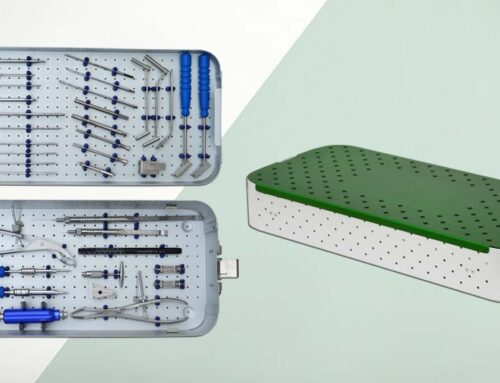
A Variable Angle Radius Plates Instrument Set is a specialized collection of orthopedic surgical tools and implants used for the fixation of fractures in the distal radius (wrist end of the forearm bone). These sets are designed for procedures that require stable internal fixation, particularly for complex, intra-articular, extra-articular, or osteoporotic fractures.
Key Components:
Here are the key components of a Variable Angle Radius Plates Instrument Set in detail, typically used for orthopedic surgeries involving distal radius (wrist) fractures:
Variable Angle Locking Plates (Distal Radius Plates)
- Pre-contoured design: Matches the natural anatomy of the distal radius.
- Variable angle holes: Each hole allows screw placement within a range (usually ±15°) from the central axis.
- Low-profile design: Minimizes soft tissue irritation.
- Types of plates included:
- Volar locking plates (anterior wrist side)
- Dorsal locking plates (posterior wrist side)
- Radial column plates (for lateral fragments)
Locking Screws
- Thread into both the bone and the plate’s locking holes.
- Provide angular stability, meaning the plate and screw act as one unit.
- Typically, self-tapping and self-drilling designs are available.
- Available in multiple lengths and diameters.
Cortical Screws
- Used to compress the plate to the bone.
- Do not lock into the plate but provide initial fixation.
- Often used in the shaft portion of the plate.
Drill Guides
- Special sleeves that insert into the plate holes to guide the drill bit at desired angles.
- Some are fixed-angle while others allow variable angle selection.
Drill Bits
- Matched to screw size (e.g., 2.0 mm, 2.5 mm).
- Color-coded in many systems for easy identification.
- Some systems include cannulated drill bits for K-wire guidance.
Depth Gauge
- Measures the depth of the drilled hole.
- Helps in selecting the correct screw length.
Screwdriver Handles and Bits
- Used to insert locking and cortical screws.
- May include torque-limiting features to prevent over-tightening.
- Compatible with hex, star (torx), or cruciform heads depending on the screw system.
K-Wires (Kirschner Wires)
- Used temporarily to hold bone fragments in position.
- Act as guides for cannulated screws or drills.
- Useful in percutaneous fixation techniques.
Bone Holding Forceps and Clamps
- Assist in fracture reduction and plate positioning.
- Some clamps are specially contoured for the distal radius.
Plate Benders (Optional)
- If anatomical fit is not perfect, these are used to gently contour the plate to the bone.
- Careful bending maintains integrity of the plate’s locking holes.
Targeting Jigs or Aiming Guides (in some advanced systems)
- Attach to the plate to help align screws accurately.
- Particularly helpful in minimally invasive or percutaneous approaches.
Functions:
Here is a detailed explanation of the functions and surgical benefits of the Variable Angle Radius Plates Instrument Set, primarily used for the internal fixation of distal radius fractures:
Fracture Stabilization
- Provides rigid fixation of both simple and complex distal radius fractures.
- Maintains bone alignment during healing, even in osteoporotic or comminuted bone.
Variable Angle Locking Mechanism
- Allows screws to be inserted at variable angles (±15°) relative to the plate hole axis.
- Enables surgeons to target specific bone fragments for precise anatomical fixation.
- Useful in capturing small or angled fracture fragments that cannot be secured with fixed-angle plates.
Anatomic Reconstruction
- Plates are pre-contoured to match the anatomy of the distal radius.
- Aids in restoring the natural curvature and biomechanics of the wrist.
Compression Capability
- Cortical screws can be used to compress the plate to the bone, enhancing primary stability.
Guided Surgical Technique
- Includes drill guides and targeting jigs for accurate and reproducible screw placement.
- Reduces risk of damaging surrounding structures such as tendons, nerves, or vessels.
Minimally Invasive Options
- Some sets support percutaneous fixation, reducing soft tissue dissection and postoperative complications.
Benefits:
Flexible Screw Placement
- The variable angle design allows for customized screw trajectories, making it easier to fix difficult or fragmentary fractures.
Improved Fixation in Osteoporotic Bone
- Locking screws do not rely solely on bone quality for holding strength, offering secure fixation even in weak or porous bone.
Enhanced Stability
- Locking plate-screw constructs behave like an internal fixator, maintaining fracture alignment without needing bone compression.
Early Mobilization
- Rigid and stable fixation allows patients to start early wrist movement, improving functional outcomes and reducing stiffness.
Minimized Soft Tissue Irritation
- Low-profile plates and precise screw angulation reduce the risk of tendon irritation, especially of the flexor tendons on the volar side.
Versatility Across Fracture Types
- Suitable for:
- Intra-articular fractures
- Extra-articular fractures
- Comminuted fractures
- Osteotomies and reconstructions
Reduced Surgical Errors
- Color-coded instruments, depth gauges, and targeting guides improve accuracy and reduce operative time.
In summary, the Variable Angle Radius Plates Instrument Set offers maximum flexibility, strong fixation, and anatomical accuracy, making it a preferred choice for treating complex wrist fractures.