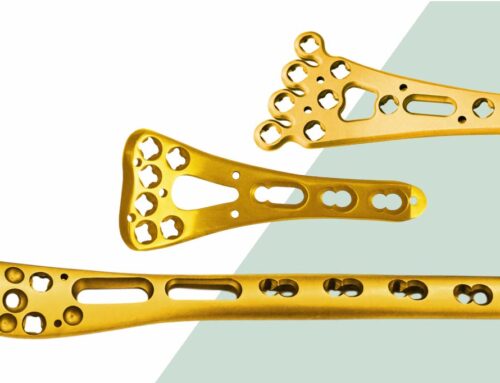
Secure Lock Wrist Fusion Plates are specialized orthopedic implants used in wrist arthrodesis, a surgical procedure that permanently fuses the wrist joint. These plates provide rigid fixation of the wrist bones—typically the distal radius, carpal bones, and sometimes metacarpals—to eliminate motion and relieve pain in severely damaged or arthritic wrists.
Key Features of Secure Lock Wrist Fusion Plates:
Locking Screw Technology:
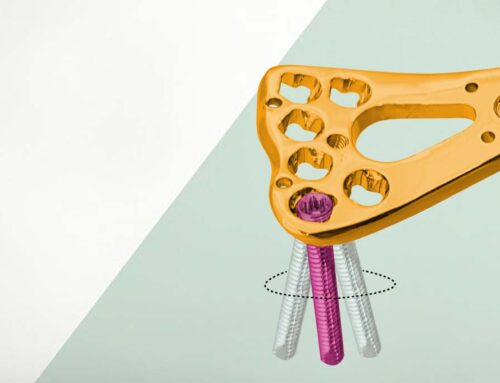
- Screws lock into the plate, creating a fixed-angle construct that enhances stability.
Anatomically Contoured Design:
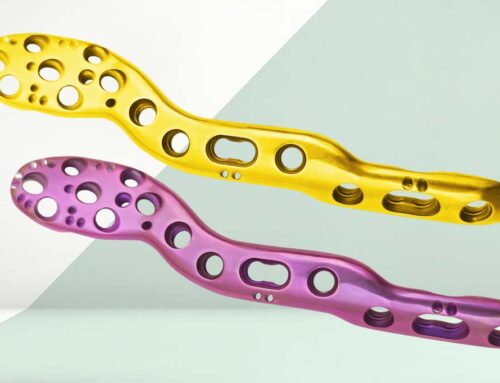
- Shaped to fit the natural curve and size of the wrist bones.
Low-Profile Plate:
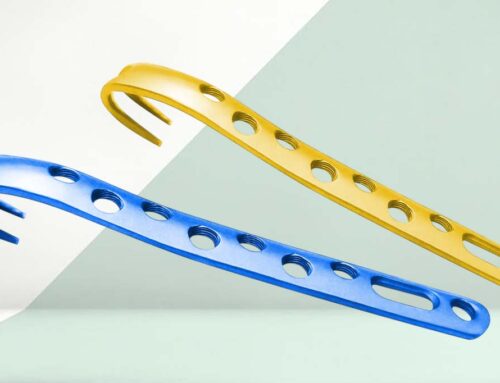
- Minimizes soft tissue irritation and postoperative discomfort.
Multiple Screw Holes:
- Allows for versatile fixation in multiple bone fragments.
Material:
- Typically made from titanium or stainless steel—strong, lightweight, and biocompatible.
When Are They Used?
- Severe wrist arthritis (rheumatoid, post-traumatic, osteoarthritis)
- Failed previous wrist surgeries
- Irreparable ligament injuries
- Wrist instability or deformity
- Tumor resection requiring fusion
Uses of Secure Lock Wrist Fusion Plate
The Secure Lock Wrist Fusion Plate is used primarily in wrist arthrodesis procedures, where the wrist joint is surgically fused to eliminate movement, provide stability, and relieve chronic pain. Its design allows for rigid fixation of the wrist bones, particularly in conditions where conservative treatments have failed or where joint reconstruction is not feasible.
Treatment of Severe Wrist Arthritis
- Used in rheumatoid arthritis, osteoarthritis, or post-traumatic arthritis where joint surfaces are severely damaged.
- Fusion of the wrist eliminates pain caused by bone-on-bone friction.
Post-Traumatic Wrist Conditions
- After complex wrist fractures, especially those involving the distal radius and carpal bones, where reconstruction is not possible.
- Used to restore functional alignment and prevent chronic instability or deformity.
Failed Previous Surgeries
- In cases where wrist implants or reconstructions have failed, secure lock plates offer a salvage solution by stabilizing the joint permanently.
- Ensures structural integrity in complex revisions.
Neuromuscular Conditions
- In diseases like cerebral palsy or brachial plexus injuries, wrist fusion with secure lock plates provides a stable platform for hand function.
- Helps to prevent involuntary or spastic wrist movement.
Tumor Resection Involving Wrist
- After removal of bone tumors in the distal radius or carpal bones, fusion is performed to maintain structural support.
- The plate stabilizes the wrist and protects the resection site.
Wrist Instability and Deformity
- For patients with chronic ligament injuries, collapsing wrist syndromes, or carpal collapse, fusion offers a pain-free, stable position.
- Secure Lock plates allow precise alignment and fusion in optimal position.
Congenital Abnormalities
- Rarely, in congenital wrist deformities that hinder function, these plates can be used to create a stable, functional wrist through fusion.
Why Secure Lock Plates Are Preferred:
- Locking mechanism ensures strong screw-to-plate fixation.
- Anatomical contour reduces soft tissue irritation and improves fusion rates.
- Rigid stability accelerates healing and supports early rehabilitation.
Benefits of Secure Lock Wrist Fusion Plate
The Secure Lock Wrist Fusion Plate offers several critical benefits in orthopedic surgery, particularly for patients requiring wrist arthrodesis (fusion). These plates are engineered to provide maximum stability, alignment, and pain relief, while minimizing complications and promoting faster recovery.
Stable, Rigid Fixation
- The locking mechanism between screws and the plate forms a fixed-angle construct.
- This enhances the stability of the fusion site, even in osteoporotic or poor-quality bone.
- Promotes solid bone union and reduces micromotion that can delay healing.
Improved Surgical Precision and Alignment
- The plate is pre-contoured to the anatomy of the wrist, helping surgeons to position the wrist in an optimal functional alignment (usually around 10–20° of extension).
- Prevents malposition, which can affect hand function after fusion.
Reduced Surgery Time
- The design allows for easy and fast placement, minimizing intraoperative handling.
- Locking technology simplifies screw placement since tapping is often not required.
Minimized Risk of Hardware Loosening or Failure
- Traditional plates rely on compression between bone and screw, which can loosen over time.
- Secure lock plates distribute forces evenly and maintain fixation even under load, especially during rehabilitation.
Enhanced Load-Bearing Capacity
- The locked system is biomechanically stronger than conventional plating.
- Allows for early mobilization of surrounding joints (like fingers and elbow), improving overall upper limb function.
Versatility for Complex Cases
Effective in patients with:
- Severe deformity
- Poor bone stock
- Multi-level instability
- Can be used even in revision surgeries, post-tumor resection, or multiple failed interventions.
Improved Patient Comfort and Outcome
- The low-profile design reduces soft tissue irritation and risk of hardware prominence.
- Patients report significant pain relief, better hand positioning, and improved ability to perform daily activities after healing.
Lower Risk of Reoperation
- Fusion success rates with secure lock plates are high due to their stable, durable fixation.
- Reduces the chances of nonunion or implant failure, avoiding further surgeries.