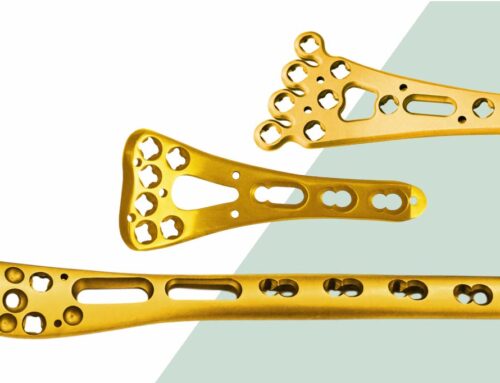
A Distal Fibula Hook Plate is a specialized orthopaedic implant used to treat fractures and injuries at the distal end of the fibula, especially near the ankle joint. It is a type of locking or non-locking plate with hook-like projections at one end, designed to grip the bone securely for stable fixation.
Key Features of a Distal Fibula Hook Plate
Here are the key features of a Distal Fibula Hook Plate in detail:
Hooked Distal End
- Function: The distal portion of the plate has hook-like projections that cradle the lateral malleolus.
- Purpose: These hooks provide extra anchorage to the bony fragment, especially helpful in comminuted or small distal fractures.
- Benefit: Enhances stability and prevents distal displacement of the fragment.
Anatomical Contour
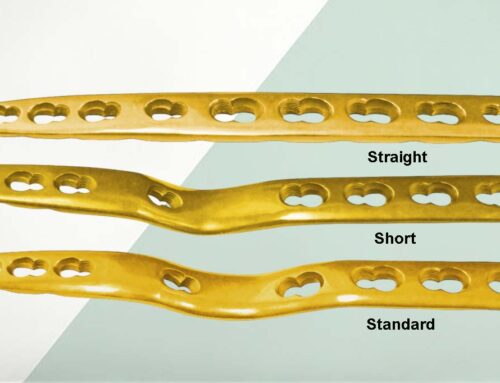
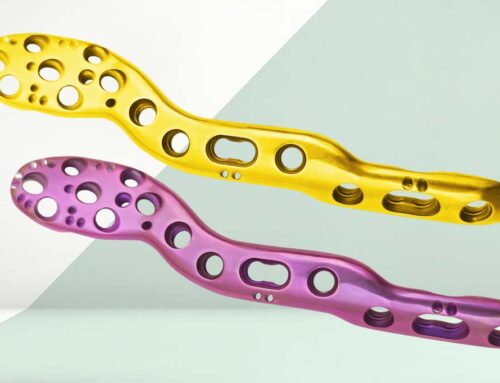
- Design: Pre-contoured to match the natural anatomy of the distal fibula.
- Function: Reduces the need for intraoperative bending or contouring.
- Benefit: Ensures precise fit, minimizes soft tissue irritation, and promotes correct alignment of the bone.
Multiple Screw Holes
- Types: Includes options for locking, cortical, and sometimes cancellous screws.
- Arrangement: Proximal and distal segments contain strategically placed holes for optimal screw trajectory.
- Benefit: Offers versatile fixation options tailored to the specific fracture pattern and bone quality.
Locking Compression Technology (Optional)
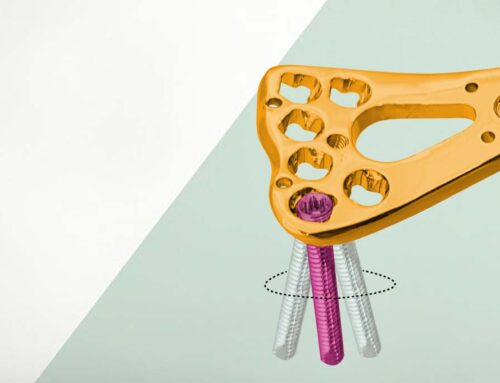
- Locking Holes: Compatible with locking screws that create an angularly stable construct.
- Benefit: Prevents screw back-out and provides strong fixation, particularly in osteoporotic bone or comminuted fractures.
Low-Profile Design
- Structure: Thin and smooth plate design.
- Purpose: Reduces the chance of soft tissue irritation, especially around the ankle where the skin is thin.
- Benefit: Promotes patient comfort and lowers the risk of implant prominence or need for early hardware removal.
Radiolucency & Marking (Some Models)
- Feature: Some plates are marked or radiolucent for improved intraoperative visualization under fluoroscopy.
- Benefit: Helps surgeons confirm locking plate and screw placement precisely during surgery.
Material Quality
- Composition: Usually made from medical-grade stainless steel or titanium alloy.
- Properties: Corrosion-resistant, biocompatible, and high tensile strength.
- Benefit: Durable and safe for long-term implantation.
Advantage of Distal Fibula Hook Plate
Here are the detailed advantages of a Distal Fibula Hook Plate in orthopedic fracture management:
Enhanced Distal Fixation
- The hooked design at the distal end provides a firm grip on the lateral malleolus or the small distal bone fragment.
- Advantage: Prevents fragment displacement, especially in comminuted or small avulsion fractures of the distal fibula.
Anatomical Fit for Precise Alignment
- The plate is pre-contoured to match the natural curve of the distal fibula.
- Advantage: Ensures proper anatomical reduction without the need for manual bending, leading to better functional outcomes and less operative time.
Stable Fixation for Early Mobilization
- The combination of locking and non-locking screw options provides a rigid construct.
- Advantage: Allows for early weight-bearing and mobilization, reducing the risk of joint stiffness and muscle atrophy.
Useful in Osteoporotic Bone
- Locking screws form a fixed-angle construct with the plate, which is crucial for fragile or osteoporotic bone.
- Advantage: Prevents screw loosening or backing out, improving fixation reliability in elderly patients.
Minimally Invasive Potential
- The design permits percutaneous or minimally invasive surgical techniques in some cases.
- Advantage: Less soft tissue damage, reduced blood loss, and faster post-operative recovery.
Reduced Soft Tissue Irritation
- The plate’s low-profile design minimizes bulk under the skin.
- Advantage: Decreases the risk of skin irritation, wound complications, or the need for secondary plate removal.
Versatility in Fracture Types
- Suitable for a range of distal fibular fractures, including oblique, transverse, spiral, comminuted, or fractures involving the syndesmosis.
- Advantage: One plate can address multiple clinical scenarios, improving inventory efficiency in surgical centers.
Radiographic Visibility for Accurate Monitoring
- Many designs include radiolucent zones or clear fluoroscopic markers.
- Advantage: Facilitates accurate placement of the plate and screws and postoperative fracture monitoring.
Durable and Biocompatible Material
- Made from stainless steel or titanium for strength and biocompatibility.
- Advantage: Ensures long-term stability with minimal risk of allergic reaction or implant failure.